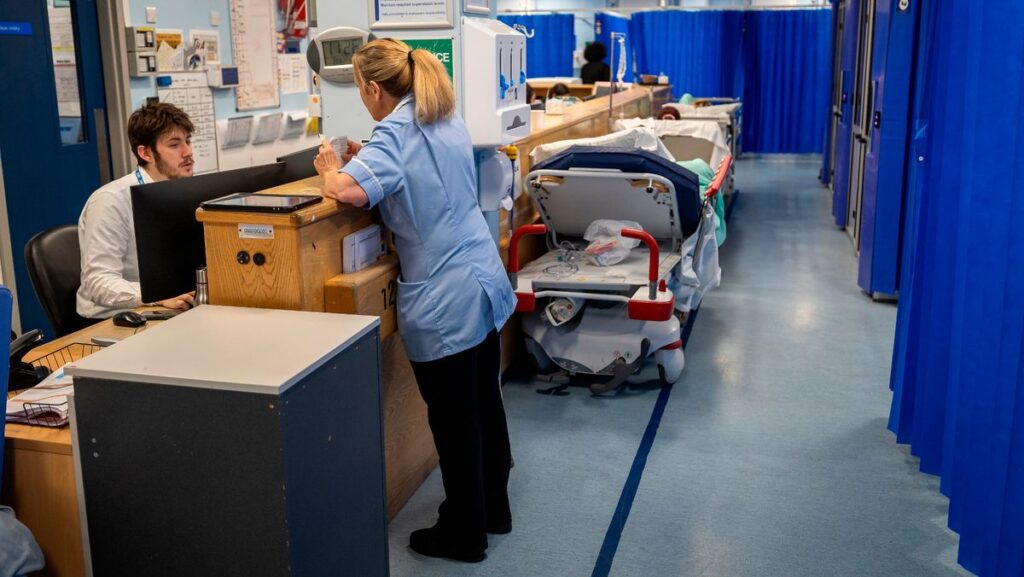
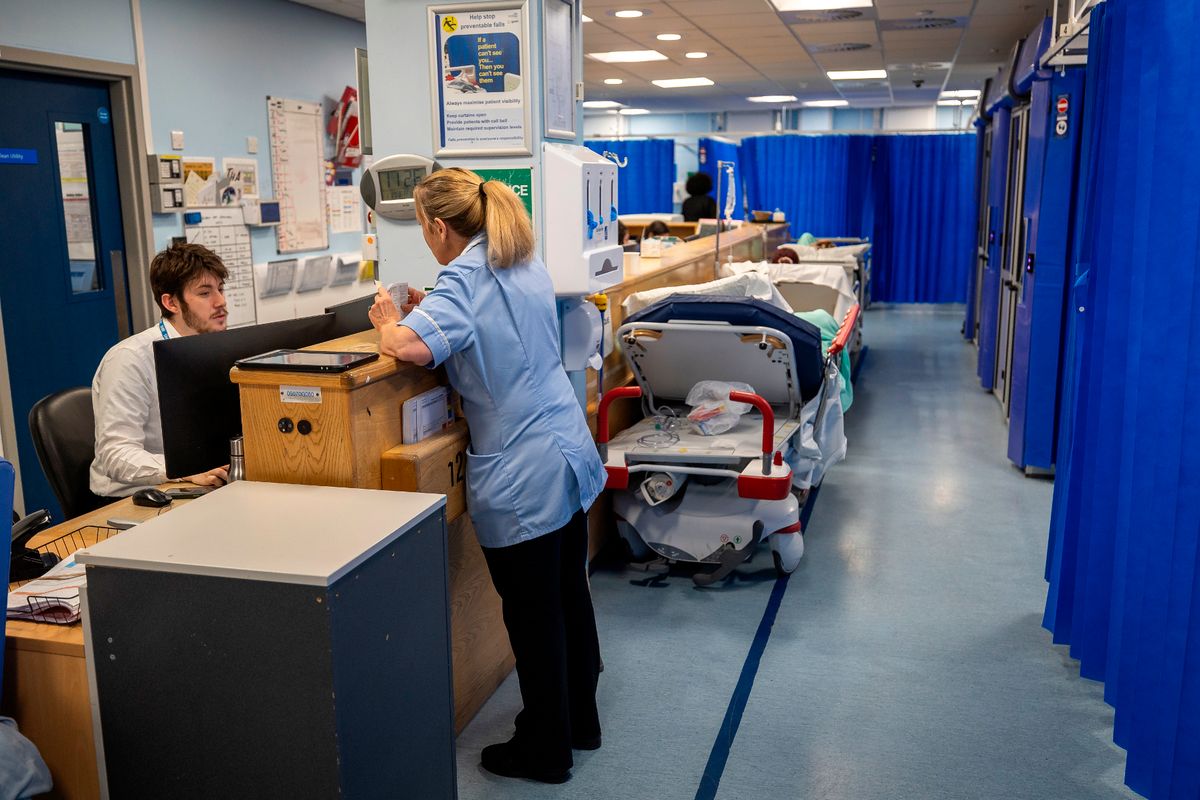

Hundreds of thousands of NHS patients are spending more than 24 hours in A&E – with more than 13,000 waiting at least three days – as research shows how long waits have surged
Nearly half a million NHS patients spent over a day in A&E last year, new data shows.
Research by the British Medical Journal found 493,751 patients spent over 24 hours in emergency departments before either being admitted to a hospital bed, transferred or discharged.
Of these, 13,386 waited at least three days. Numbers spending at least a day in A&E increased by a third between 2023 and 2025 before a more recent improvement in A&E turnaround times.
Mumtaz Patel, president of the Royal College of Physicians, said waits of over 24 hours “were almost unheard of” before 2020, adding: “I’ve heard of patients who say they’d rather die at home than come into hospital and be waiting.”
READ MORE: NHS sees ‘biggest improvement’ since Tony Blair’s New Labour came to power in 1990sREAD MORE: NHS waiting list ‘lowest in 3 years’ but A&E waits still put patients ‘at risk’A&E waits got steadily longer during over a decade of Conservative governments before which waits over 12 hours were unheard of. Official data published by NHS England shows that in December 2019 some 2,356 patients waited longer than 12 hours on a trolley until a proper bed became available. Then by December 2025 it was 50,775 patients.
Doctors said they are “ashamed” of long waits. Dr Den Langhor, lead of the British Medical Association’s consultants committee emergency medicine, said: “This data exposes the depth of the corridor care crisis in our emergency departments.
“Any doctor working in emergency care will have had shifts where they have left the hospital to go home for the night, and returning the next morning to see the same patients in waiting rooms or in corridors. And as we see here, in some cases, these patients are still waiting for a third day. This is undignified and unsafe.
“There is no excuse for hospital patients in a developed country being treated this way, and doctors are ashamed that it has come to this.”
NHS England also said there were a record number of A&E attendances in March, driven by the meningitis outbreak in Kent. There were 2.43 million visits last month, an increase of 16,000 on the previous record in May 2024.
An NHS spokesman said: “While the number of people waiting over four hours in A&E is at a five-year low – despite record attendances – thanks to the hard work of staff, we know there are still too many people waiting an unacceptably long time or being forced to wait in inappropriate spaces.
“That’s why the NHS is reforming the urgent and emergency care system and supporting the trusts facing the biggest challenges, with some good early evidence of reductions in corridor care for patients.”
The Mirror has reported on how “corridor care” was quietly normalised by NHS England from 2022 and Health Secretary Wes Streeting last week vowed to end the practice by the next general election.
Nursing union boss Nicola Ranger quit her previous job as one of the country’s top NHS leaders over the introduction of corridor care. Professor Ranger worked her way up from hospital cleaner to become one of the country’s top nurses before leaving to take over the Royal College of Nursing.
She told the Mirror she ended her glittering NHS career running frontline nursing early after realising she would have been forced to oversee the change to corridor care that would “take years to recover from”.
A decade-long NHS funding squeeze under the Tories saw NHS waits surge from 2015 onwards. The Covid pandemic then saw 999 delays increase to dangerous levels as ambulances queued outside full A&Es waiting to offload patients.
Caring for patients on trolleys in “temporary escalation spaces” such as corridors and store cupboards had previously been an emergency measure, lasting maybe 24, 48 or 72 hours.
Prof Ranger told how NHS England made the decision in 2022 to normalise such escalation spaces to get ambulances back on the road.
Source link