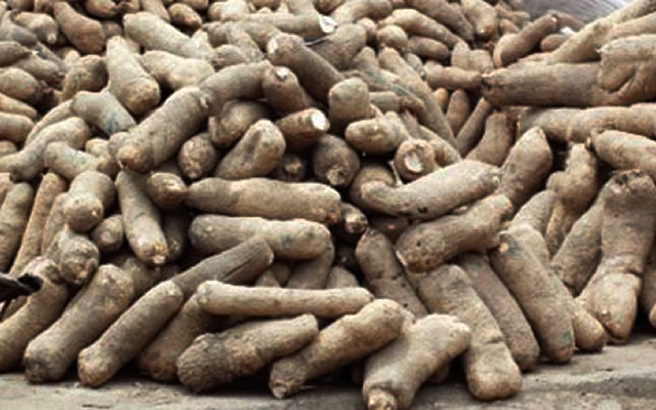
Yam prices across markets in Lagos have continued to fluctuate, with traders pointing to rising transportation costs, seasonal supply patterns, and sourcing difficulties as key drivers behind the increases.
The staple food, which remains one of the most widely consumed in Nigeria, is a daily feature in many homes and food businesses. It is commonly prepared in a variety of ways, including boiling, frying, roasting, and pounding.
In Lagos, yam is sold both in neighbourhood markets and in major wholesale centres such as Oyingbo and Mile 12, where bulk buyers often go in search of more affordable options. However, while these larger markets generally offer lower prices, many shoppers still factor in transport costs and convenience when deciding where to buy.
Traders and consumers who spoke about the trend noted that prices have risen significantly compared to previous years. They explained that seasonal shortages and higher sourcing costs have contributed to the upward movement in prices.
According to market reports, tubers that sold for about N1,200 to N2,000 during the same period in 2025 now go for roughly N2,500 to N3,500, depending on size and origin. Larger, better-quality yams attract higher prices, while smaller ones remain relatively cheaper for low-income buyers.
A trader at Oyingbo Market, Ibrahim Hassan, said the limited availability of fresh harvests was affecting supply, noting that the current planting season had just begun. He added that prices could rise further in the coming months, saying that yams currently sold between N2,500 and N3,000 could cost almost twice as much by August.
Another trader, Jumoke Fakunle, explained that pricing largely depends on tuber size, adding that even the cheapest yams in the market now fall within the N2,500 to N3,500 range. She also noted that prices tend to be slightly lower in major wholesale hubs compared to smaller neighbourhood markets.
At Mile 12 Market, Abiodun Ariyo also confirmed that prices have risen compared to the same period last year, pointing out that yams now selling for N2,500 to N3,000 were previously available for between N1,200 and N2,000.
Another trader, Kehinde Adebayo, attributed the price differences between markets to bulk purchasing and direct access to suppliers in wholesale centres. She explained that retailers in smaller markets typically buy from these hubs and then add transport and other costs before reselling.
On the consumer side, opinions remain mixed. Amaka Njoku said she prefers buying from nearby markets because it is more convenient for small household purchases, noting that current prices are still relatively fair compared to previous spikes when a tuber could cost nearly N10,000. She added that transport costs often make trips to distant markets less worthwhile.
In contrast, Titilope Adekeye said she prefers shopping at larger markets where prices are often lower, citing recent purchases between N1,500 and N2,500 per tuber and questioning why she should pay more elsewhere.
Meanwhile, Funmilayo Ajayi, a resident of Surulere, said she now travels to Oyingbo Market because prices in her neighbourhood have become too high. She explained that even after accounting for transport costs, she still manages to save money due to the lower prices available in the wholesale market.
Overall, the varying costs across Lagos markets highlight how transport expenses, market location, and seasonal supply conditions continue to influence both pricing and purchasing decisions for one of Nigeria’s most important staple foods.