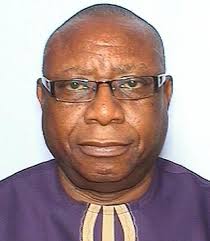
A former member of the House of Representatives representing Amuwo-Odofin Federal Constituency, Oghene Egoh, has expressed support for President Bola Tinubu’s administration, praising ongoing infrastructure projects and economic policy reforms as signs of what he described as a deliberate national development drive.
Speaking with journalists in Lagos on Sunday, Egoh said the current administration had shown a clear commitment to repositioning the country through large-scale infrastructure development and policy decisions aimed at long-term economic stability.
He pointed to several road projects across the country as evidence of this direction, noting that they reflect a strategic focus on improving connectivity and supporting economic activities nationwide.
Among the projects highlighted was the Lagos-Calabar Coastal Highway, which he described as a landmark initiative expected to strengthen coastal connectivity, stimulate tourism, and expand opportunities within the blue economy across multiple states.
He said the scale of the project places it among the most ambitious infrastructure efforts in Nigeria’s history, adding that it represents a long-term investment in economic growth and regional integration.
Egoh also referenced the Sokoto-Badagry Superhighway, saying it is expected to improve north-south trade routes, enhance agricultural logistics, and contribute to national cohesion through better transport links.
He further cited ongoing work on the Abuja-Kaduna-Zaria-Kano dual carriageway, alongside the accelerated rehabilitation of the Lagos-Ibadan Expressway, as indicators of renewed attention to key economic corridors.
According to him, the Lagos-Ibadan Expressway remains one of the most critical transport routes in the country, and its near completion represents a significant milestone in infrastructure delivery.
He also mentioned progress on the Enugu-Onitsha Expressway and the expansion of the Bodo-Bonny Road, noting that both projects are improving the movement of goods and people between regions and supporting economic activity.
Egoh commended the government’s adoption of reinforced concrete pavement for major highways, stating that the approach would improve road durability, reduce long-term maintenance costs, and ensure more efficient use of public funds.
On economic reforms, he said policies such as fuel subsidy removal, foreign exchange adjustments, and new infrastructure financing approaches were necessary steps aimed at building a more stable economic foundation, despite their immediate impact on citizens.
He described economic reform as a difficult but necessary process, arguing that strong leadership requires taking tough decisions in the interest of long-term national benefit.
Egoh urged Nigerians to remain patient with the administration, expressing confidence that the combined impact of infrastructure development and economic reforms would become more visible and beneficial in the coming years.