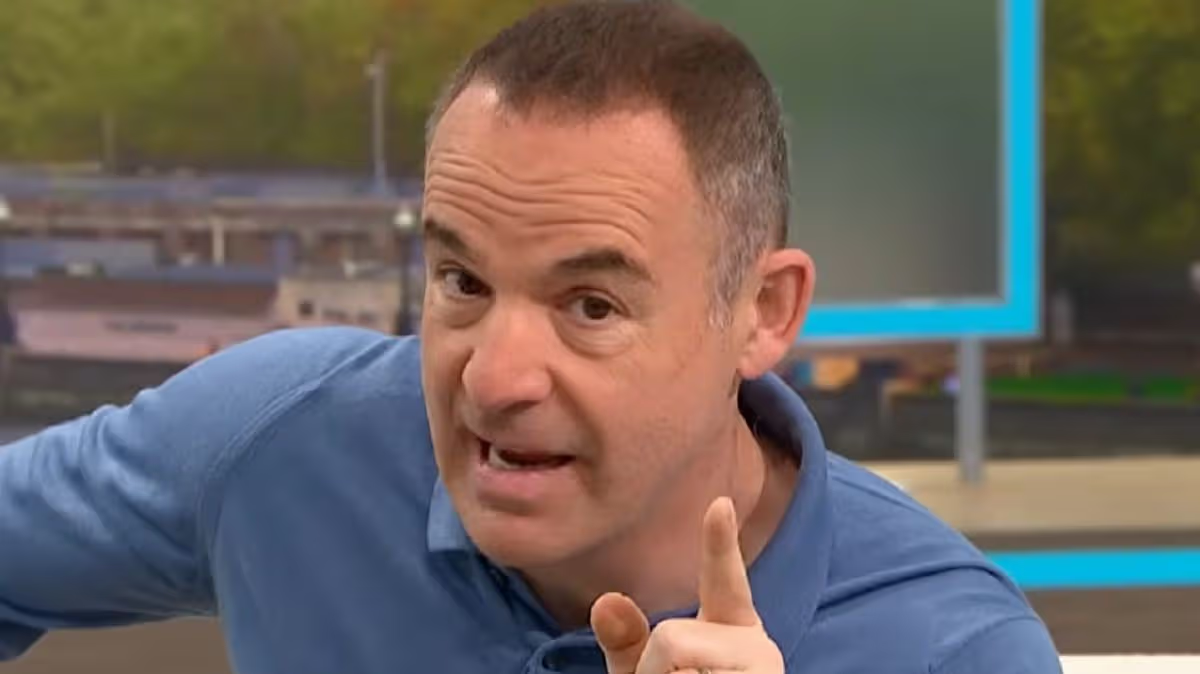
Martin Lewis appeared on Good Morning Britain to explain the new 63-day breathing space law change and what people’s rights are

Martin Lewis explained what’s happening on Good Morning Britain(Image: ITV)
Finance expert Martin Lewis has this morning issued crucial advice that impacts hundreds of thousands of people throughout the UK. Appearing on today’s (June 17) edition of Good Morning Britain on ITV, the money expert addressed a widespread concern and outlined how his campaigning efforts have brought about a change in the law.
Lewis has spoken out against the tactics employed by bailiffs, particularly in relation to council tax, and is a fierce advocate for mandatory government regulation to safeguard vulnerable people. During the television appearance, he shed light on what bailiffs are actually entitled to do and what rights people have, warning that vast numbers of people are visited by unregulated bailiffs every year.
The MoneySavingExpert founder is urging the government to stop “dragging its feet” on plans to mandate bailiff regulation. It is an industry in which five million bailiffs collect more than a billion pounds a year from debt-ridden Brits, reports Wales Online.
Martin Lewis said: “1.7 million bailiffs are sent to reclaim council tax each year. We’ve done on the show before that council tax is the most hideous, aggressive form of debt collection in the country.”
How is the law changing and when?
Legislation surrounding council tax debt collection is set to change next April. Martin Lewis describes current council tax collection as the “most hideous, aggressive form of debt collection”.
He warns that missing just one monthly payment can trigger a demand for the full year’s bill within three weeks, with bailiff action swiftly following. However, a recent campaign victory means legislation will shortly require a 63-day “breathing space” before councils can escalate the debt.
He explained: “Within three weeks of missing a single monthly payment, you can ask to be paid for the whole year. Within three weeks of being asked to pay for the whole year, if you haven’t been paid for the whole year, how are you meant to find a year when you can pay for a month? You can have the bailiffs sent in, once they’ve gone to court – they always have to go to court before you get bailiffs. That’s changing next April. We heard it here first on this show last time I was on.”
Susanna said: “That’s a win for your campaigning.” Martin Lewis said: “It is a big win. The law is changing, so you’ll have 63 days breathing space before they can escalate it to a year, and there’s some other changes going on too.”
At present, the Enforcement Conduct Board operates as a voluntary regulator, leaving hundreds of thousands of people visited by unregulated bailiffs every year. Despite a government consultation in June 2025 acknowledging the need for an independent statutory regulator “with teeth,” Lewis accuses the government of “dragging its feet” in making it officially law.
Martin Lewis highlighted the devastating consequences this has on vulnerable people. Of the five million bailiff visits each year, three-quarters go to homes where residents are struggling with mental health issues.
Debt charity StepChange reveals that bailiff visits harm the mental health of 95% of people and the physical health of 91%, demonstrating how damaging the practice can be when handled incorrectly.
He said: “So, eight million debt collection enforcements in a year, five million bailiffs sent, three-quarters of the homes where bailiffs go, the people have mental health problems, which is why my Money and Mental Health Policy Institute charity have been calling for this change.”
In April, the government unveiled a council tax overhaul following Martin Lewis’ campaigning to “protect the most vulnerable households”. At the time, Local Government Secretary Steve Reed said: “Too many families are facing aggressive enforcement action, with people left terrified of bailiffs knocking on the door because one month’s council tax bill was missed.
“We will stop this and make the system fairer by supporting families who fall behind. I want to thank Martin Lewis and his charity for their tireless campaigning, shining a light on this crucial issue affecting millions of people.”
What are your rights if bailiffs come knocking?
Martin Lewis emphasises that you are generally under no obligation to answer the door to a bailiff. Bailiffs are only permitted to force entry under very specific, court-appointed circumstances, such as for unpaid criminal fines, income tax, or stamp duty.
Martin Lewis told viewers: “Just some general rules on bailiffs. You do not need to open the door. There’s only very limited circumstances where they can force you into your house. Unpaid criminal fines, unpaid income tax, unpaid stamp duty. They must be court-appointed.”
He points out that bailiffs cannot enter your home before 6am or after 9pm, nor are they permitted to enter if only children under 16 or vulnerable individuals are present. They are also strictly forbidden from lying or abusing their powers.
He added: “They can’t enter by force. They can’t enter if they’re only under 16s in. They can’t enter if they’re only vulnerable people are in. They can’t enter after 9pm or before 6am in the morning. They can’t lie, abuse powers. If you don’t let them in, though.. “They can take things from outside of your house, and they can escalate costs. They can’t take essentials. They can’t take other people’s items.”
When asked by fellow presenter Susanna Reid if they can take your car, he replied: “If the car’s outside the house, they can take your car. Unless you could argue it for work, I presume, in certain cases, depending on what you did for work, which could prevent it.”
While bailiffs are unable to seize essential household items or belongings that belong to other people, they are permitted to take items left outside your home, such as a car, unless you can demonstrate it is required for your work. Bear in mind that if you refuse them entry, they may increase the collection costs.
For anyone facing an emergency, such as an unexpected repossession threat, Martin Lewis strongly advises contacting a local advice agency or Citizens Advice for urgent, one-on-one help.
When can bailiffs force entry?
Bailiffs can only force entry-usually by returning with a locksmith, not by kicking the door down-in very limited circumstances:
- To collect unpaid criminal magistrates’ court fines.
- To collect HMRC tax debts (with explicit court permission).
- If you have previously let them into your home, signed a Controlled Goods Agreement, and subsequently missed a payment.
For regular civil debts like Council Tax arrears, credit cards, personal loans, or parking tickets, they have no right to force entry.
What can bailiffs take, and what can’t they?
According to Citizens Advice, if a bailiff is outside or manages to gain entry, there are strict rules governing what they are allowed to confiscate. They can take luxury items, such as TVs and game consoles, as well as jewellery, antiques, vehicles parked on your driveway or public road and jointly owned property.
If you think a bailiff visit may be on the cards, move your vehicle onto a neighbour’s private driveway (with their permission) or lock it safely in a garage away from your home to prevent it being clamped or towed. As for items they are prohibited from seizing, these include everyday essentials such as clothing, beds, a fridge and cooker, along with tools, computers and vehicles required for work or study (up to £1,350 in value), possessions belonging to a third party and children’s belongings, toys and family pets.