The dads of Alice Ruggles and Hollie Gazzard said an expansion of ‘right to know’ laws will be transformative for people being targeted online by vile stalkers online

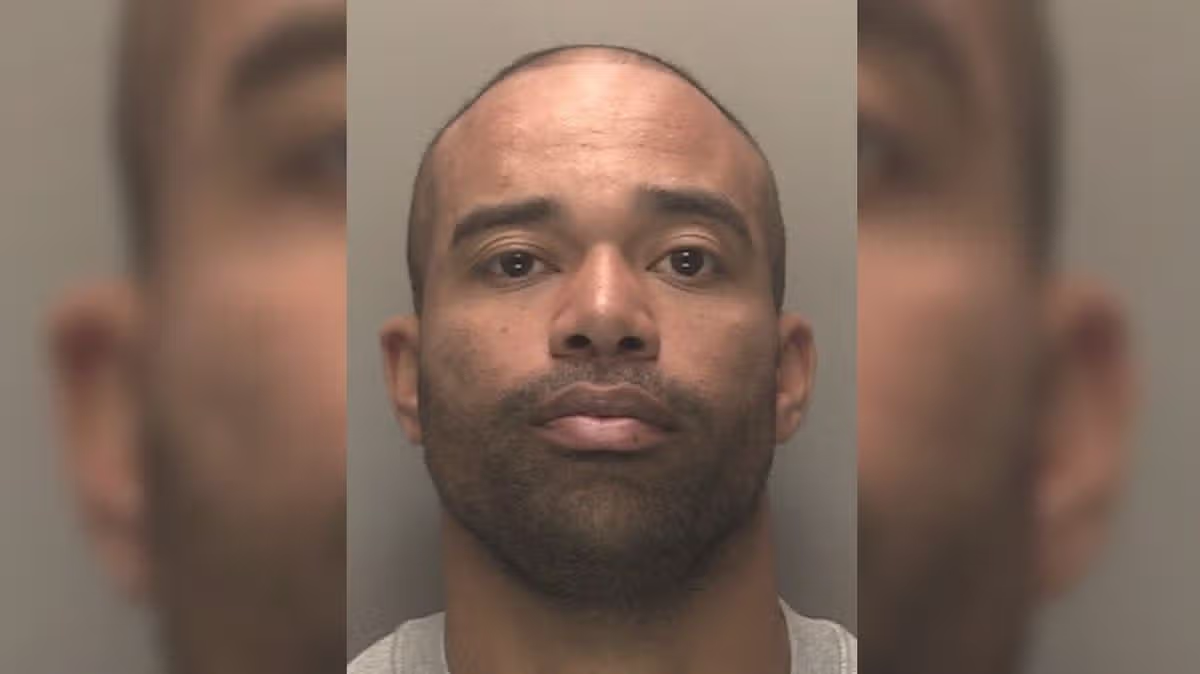
Alice Ruggles was murdered in her home by her stalker ex-boyfriend(Image: PA)
The families of two women murdered by violent exes have voiced their relief after strong new laws to tackle stalking passed.
The dads of victims Alice Ruggles and Hollie Gazzard said an expansion of ‘right to know’ rules will be transformative. Police will now be required to share the identity of online stalkers to their victims as quickly as possible after tracking them down.
It comes after campaigners warned that being targeted by anonymous accounts is one of the most frightening aspects. The Crime and Policing Act, which has passed its final Parliamentary hurdle, also gives courts tougher powers to impose Stalking Protection Orders, even if a suspect is acquitted.
Clive Ruggles, whose daughter Alice, 24, was murdered by her stalker ex-boyfriend, said: “Unless you have been a stalking victim, or close to one, it is hard to imagine just how distressing those endless repeated, and often vile, intrusions can be.
READ MORE: Nigel Farage ‘must face probe over £5m donation from crypto billionaire’ demandREAD MORE: Minister lashes out at Labour rebels after tense vote over Starmer probe demand
“And not even to know who is responsible, what is motivating them, takes this to another level. I strongly welcome this move to help people find out more quickly who is stalking them online.
“Stalking, whether physical or online, is hugely impactive and often life-changing for the victim. In the worst cases it can escalate to murder, something I know all too well because of what happened to my daughter Alice.”
Alice was murdered in October 2016 by Trimaan Dhillon, who became obsessed with her after she ended their relationship. He broke into her Gateshead flat and attacked her with a carving knife.
And Nick Gazzard, whose 20-year-old daughter Hollie was stabbed to death at the hairdressers where she worked, said: “Stalking destroys lives, not just through individual incidents but through the constant, cumulative fear it creates.
“Too many victims have been left in a state of uncertainty and danger because systems have not moved quickly enough to recognise ongoing risk. As Hollie’s dad, who was stalked before she was killed by her jealous ex-partner, this is something I know only too well.”
Hollie was killed at her Gloucester workplace by Asher Maslin, 22, days after she broke up with him in 2014. The new regulations will help victims understand the threats they face and respond faster, supporters said.
Jess Phillips, Minister for Safeguarding and Violence Against Women and Girls, said: “As a victim of stalking myself, I know just how terrifying and all‑consuming this crime can be.
“When we came into government, we made clear that we would crack down on stalking as part of our mission to halve violence against women and girls within a decade. Seeing these measures pass into law is an important step forward in putting victims first and rooting out this vile crime.”
According to the Crime Survey for England and Wales, more than 1.4million people over 16 suffered experienced stalking last year alone. Jane Harvey, chief executive of the Hollie Gazzard Trust, said: “These reforms send a clear message that stalking will be taken more seriously, that victims’ safety comes first, and that perpetrators will no longer be able to rely on delay and anonymity to continue their abuse.
“As one of the UK’s first specialist stalking case workers, I supported a number of women who targeted by anonymous predators, many of these cases had a sexual motivation. The level of fear experienced in these cases cannot be understated.”
The Paladin National Stalking Advocacy Service branded the legisaltion a significant step forward. Chief operating officer Louise said: “In cases where the stalker is unknown to the victim, we consistently hear how not knowing who is behind the behaviour can leave victims living in fear, uncertain about the level of risk they face and unsure of who they can trust.
“The introduction of statutory Right to Know guidance is therefore a vital shift. It will allow police to lawfully disclose the identity of online stalkers at an earlier stage, helping victims better understand the threat, assess their safety, and regain a sense of control.”
She welcomed the extension of Stalking Protection Orders, which will be issued in cases where a suspect is acquitted, but where there is sufficient evidence of ongoing risk.
Claire Waxman, Victims’ Commissioner for England and Wales, said: “These orders are a vital tool in keeping people safe and in addressing stalkers’ behaviour, making them easier to obtain and accessible on conviction should help protection be put in place sooner.
“In stalking cases, speed is critical, and our overburdened court system can still slow access to protection. It is therefore encouraging that, during the passage of the Bill, the Government has given assurances it will consider quicker, police‑led safeguards, including Stalking Protection Notices.”