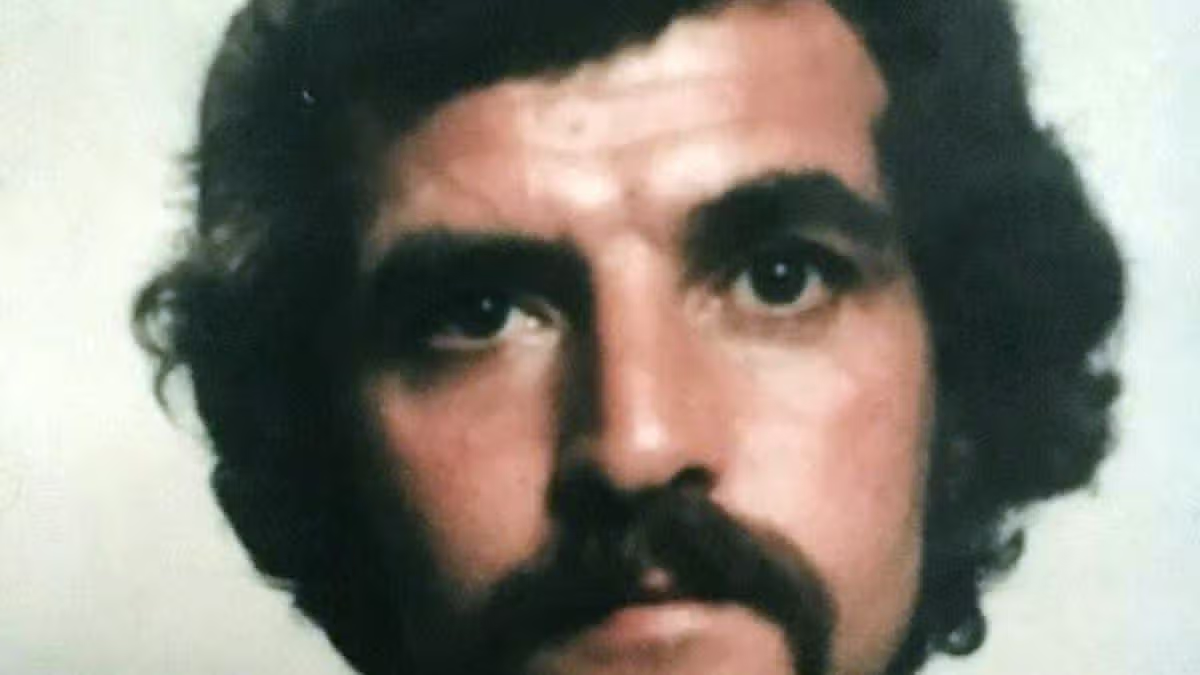
Crime writer Lee Child spoke to The Mirror’s Dr Aimee Walsh about his role as the UK’s first Prison Reading Laureate, using literacy to cut reoffending and help inmates rebuild their lives.

Child hopes that the long-term effects will stretch far beyond the literacy sessions(Image: Getty Images)
Top crime writer Lee Child has spent his career inhabiting the world of criminals – at least imaginatively. Now, the international bestselling author is going inside UK prisons in the hopes of cutting reoffending.
Child has written more than thirty books, and is best known for his Jack Reacher series. For those who aren’t readers, his work will be familiar from screen adaptations – two films starring Tom Cruise, as well as an Amazon Prime TV series. Child’s household-name status allows him to draw those not-yet-readers into the exciting world of books.
His latest project is all about giving back. As the UK’s first ever Prison Reading Laureate, Child hopes that the long-term effects will stretch far beyond the literacy sessions.
The aim of the project is to prevent one in 10 released prisoners from reoffending by giving them the skills they need to thrive beyond incarceration. As the pilot scheme is only in its infancy, the results remain to be seen – but the appetite for change is there in prisons.
Reading and literacy is a serious issue within prisons. Ministry of Justice figures show that over half of adult prisoners have literacy levels below those expected of an 11-year-old. The National Literacy Trust estimates that around two-thirds of people in custody have low literacy – more than four times the rate found in the general adult population.
“Every week hundreds are released at the end of their sentence and tragically way too many of them then reoffend and come back again,” Child exclusively told The Mirror’s Dr Aimee Walsh.
The public purse pays out £53,801 to imprison a person for one year – so Child is tackling literacy as a core issue in rehabilitation. He points to low literacy as one reason that some have ended up behind bars in the first place.
“There are women in prison because they haven’t paid their TV license. And why haven’t they? Because, for some of them anyway, they can’t read,” the Reacher writer explained.
“They get a warning letter. They have no idea what it says. They get demands, they get a summons, they don’t pay the fine, they don’t go to court. So, they end up in prison simply because they couldn’t read.”
Want to hear the latest books news and reviews from The Mirror’s resident bookworm? Follow Aimée Walsh on Tiktok and Instagram
Child continued: “There are a lot of people who really want to go straight if they can. They’ve had enough and they would like to be a normal productive citizen, but they can’t get a job because their reading is poor or they can’t rent a flat because they can’t understand the lease.”
The Prison Reading Laureate has set out to tackle this issue head-on. Child has finished the pilot programme in five prisons around Yorkshire, and the results have seen prisoners and prison officers coming together to read.
These “mixed sessions” have brought a clear benefit to the prison environment. Child explained that “because of the enthusiasm for reading, there was much less tension and stress. If they had a reading task to do, that was a quiet afternoon in the prison which everybody liked.”
Over three phases, Child first went to the prisons to speak to the inmates, then posted 75 of them a copy of one of his books to read ahead of his second visit. During that visit, they talked about what they liked – or didn’t enjoy – about the novel, opening a dialogue as equals, Child explained.
Finally, the thriller writer asked the inmates to go away and write something for him to read. In their third meeting they discussed how writing could unlock past traumas, by getting words out of the mind and on to the page.
One of the most touching elements is the “peer-to-peer solidarity”. Child said: “Some people can barely read at all. Some people are perfect readers. Amongst the 75 [people] taking part, they each help each other. And I found that really, really touching. Two prisoners will sit together and one will help the other read the book.”
And this is only the beginning, as there are plans to expand this programme to prisons beyond Yorkshire in the near future.
Love reading? Join Dr. Aimée Walsh and our community of fellow readers in the Mirror Book Club to dive deeper into the books everyone is talking about.