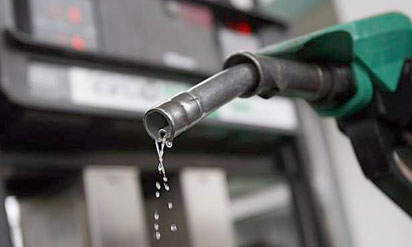
A senior management official of the Dangote Group has disclosed that the Dangote Petroleum Refinery has been absorbing part of the cost of petrol and diesel sold into the Nigerian market, helping to moderate prices despite rising global crude oil costs.
The official, who spoke confidentially because he was not authorised to comment publicly, said the refinery’s ex-depot petrol price of N1,200 per litre remains below what would ordinarily be expected under current market conditions.
According to the source, the sharp increase in crude prices following tensions between the United States and Iran has significantly raised production costs, but the refinery has continued to keep petrol and diesel prices lower than market realities would suggest.
Global oil prices surged after the Middle East conflict disrupted the Strait of Hormuz, a major shipping route for crude exports. Brent crude, which traded around $66 per barrel on February 28, later climbed above $100 per barrel.
Following the spike, Dangote increased its gantry price for petrol from N774 to N1,200 per litre. The rise in crude prices also pushed up the cost of diesel and aviation fuel.
In the aviation sector, operators are warning of possible shutdowns as Jet A-1 prices continue to soar. Dangote Refinery currently supplies more than 90 per cent of Nigeria’s aviation fuel demand.
Vice President of the Airline Operators of Nigeria, Allen Onyema, recently said jet fuel prices jumped from about N900 per litre before the crisis to between N2,700 and N2,900, with some suppliers charging as much as N3,500.
The Dangote official said the refinery had focused its price relief efforts mainly on petrol and diesel, adding that aviation fuel is being sold at prevailing market rates.
He explained that with crude prices rising sharply, the company had tried to reduce the impact on consumers by adjusting petrol prices as much as possible, while also offering some relief on diesel. However, he said it would not be possible to subsidise all fuel products at once.
When asked whether the term “optimise” referred to subsidy, the official confirmed that interpretation.
Another company source said Dangote sells aviation fuel to marketers below N2,000 per litre, revealing that the price stood at N1,799 per litre on Monday morning and had been lower previously.
Last week, a report by the Major Energies Marketers Association of Nigeria placed Dangote’s jet fuel gantry price at N1,732 per litre, compared with N1,835 per litre for imported aviation fuel.
Fuel marketers have largely declined to state how much they resell the product to airlines.
In an earlier letter dated April 14, 2026, the Airline Operators of Nigeria said the continued rise in Jet A-1 prices had become unsustainable for carriers.
The association stated that prices rose from N900 per litre on February 28 to N3,300 per litre, representing an increase of more than 300 per cent. It argued that the rise far exceeded the roughly 30 per cent increase in global crude prices and described the situation as both severe and artificial.
The airline operators said they had continued operations out of national responsibility but warned that the burden could no longer be sustained. They urged MEMAN to encourage members to adjust prices in line with international market conditions.
Responding, MEMAN linked the increase in aviation fuel prices to global market pressures and geopolitical instability in the Middle East.
The marketers also questioned the N3,300 per litre figure cited by airlines, saying their internal market survey showed average prices more than N1,000 lower. While declining to disclose specific figures due to competition laws, they advised operators facing such prices to seek alternative suppliers.
Since mid-April, the dispute over pricing has continued, with airlines maintaining that mounting fuel costs could force them to suspend operations if conditions do not improve.