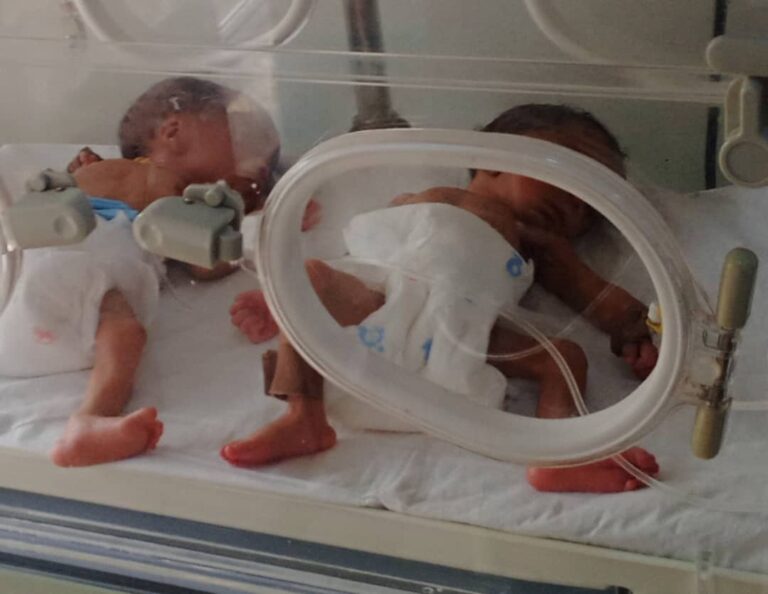
A 45-year-old woman, Mrs Mary Yaduyan, has died just hours after giving birth to a set of quintuplets—five baby boys—at a specialist hospital in Akure, Ondo State.
It was gathered that the deceased had battled infertility for over 14 years before conceiving in 2025 through in vitro fertilisation (IVF), a development that was described by her family as a long-awaited breakthrough.
Mary reportedly died following complications identified by medical personnel as pulmonary embolism, a condition involving a blockage in the blood vessels of the lungs, which occurred a few hours after she was delivered of the babies through a caesarean section.
The hospital, known for handling complex and multiple births, was thrown into mourning after her sudden death, which occurred about four hours after what was initially described as a successful delivery.
Medical reports indicated that she had attended antenatal care regularly throughout the pregnancy without major complications until around 31 weeks, when she experienced premature rupture of membranes and was placed under close observation.
A lead consultant involved in her care, who requested anonymity, said the patient had a medical history of uterine fibroids, which were surgically removed two years before the pregnancy.
According to him, the medical team managed the pregnancy conservatively in order to prolong it to a safer stage, while closely monitoring for infection and other risks associated with high-risk pregnancies.
He explained that the patient later complained of chest pain, prompting consultation with a cardiologist, although initial assessments did not indicate immediate danger.
Following delivery, she was said to have remained stable, with normal vital signs including blood pressure and oxygen levels, and was closely monitored by specialists, including an anaesthesiologist.
The consultant noted that there were no signs of excessive bleeding or complications immediately after the procedure, and her condition appeared stable in the early post-operative period.
However, her condition reportedly deteriorated suddenly and was later attributed to pulmonary embolism, which can occur without prior warning even in seemingly stable patients.
Despite resuscitation efforts by medical staff, she could not be revived.
Her elder sister, Mrs Olusola Ajayi, recounted the final moments leading up to the tragedy, saying the family had spoken with her shortly before the procedure and she had made simple food requests earlier in the day.
She said the family had been informed that the surgery would take place around 10 a.m., and they remained in contact with the deceased’s husband, who is based abroad, through a video call during the operation.
Ajayi added that the family initially celebrated after being told the delivery was successful, and even informed their mother that both mother and babies were safe.
She explained that she later stepped out to purchase medications for the newborns, but returned to find a gathering in the room and was informed that her sister was no longer responding.
According to her, doctors were actively involved in the care throughout, and the family believed every possible medical effort was made to ensure her survival.
She concluded that despite all interventions, the outcome was ultimately beyond human control, describing the loss as one the family had to accept.