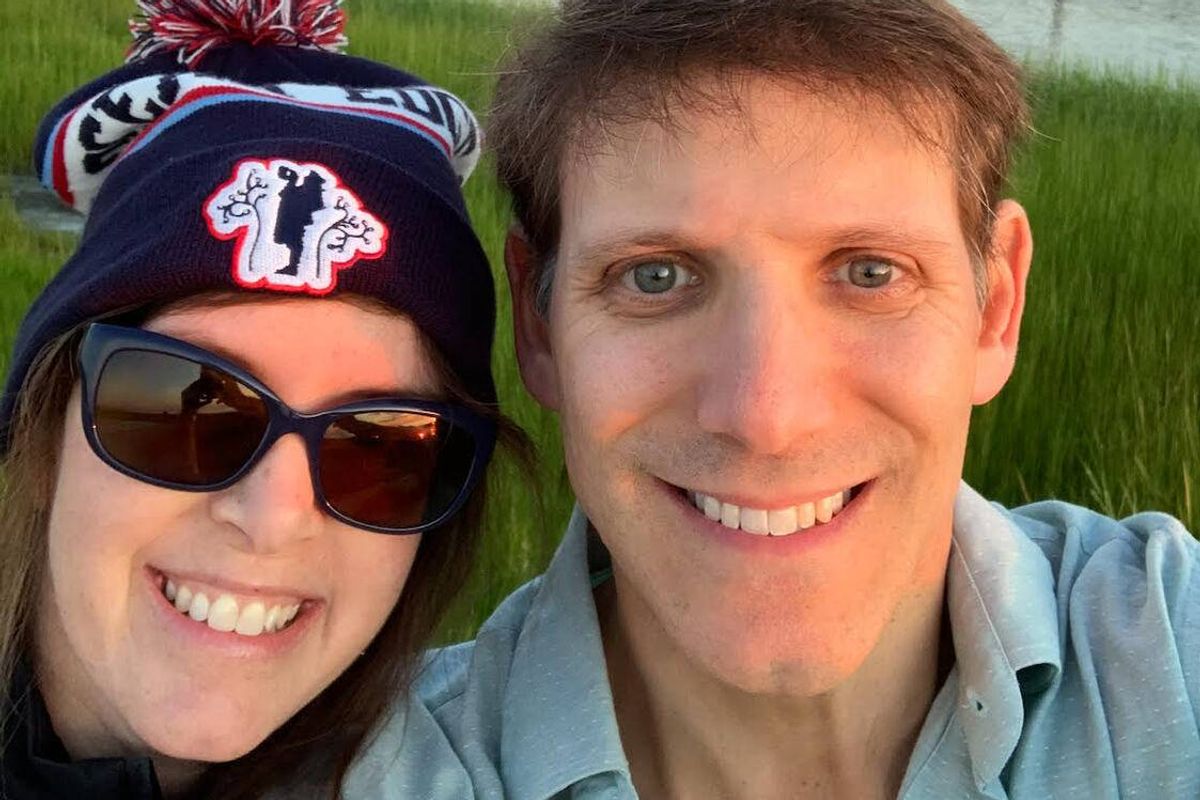
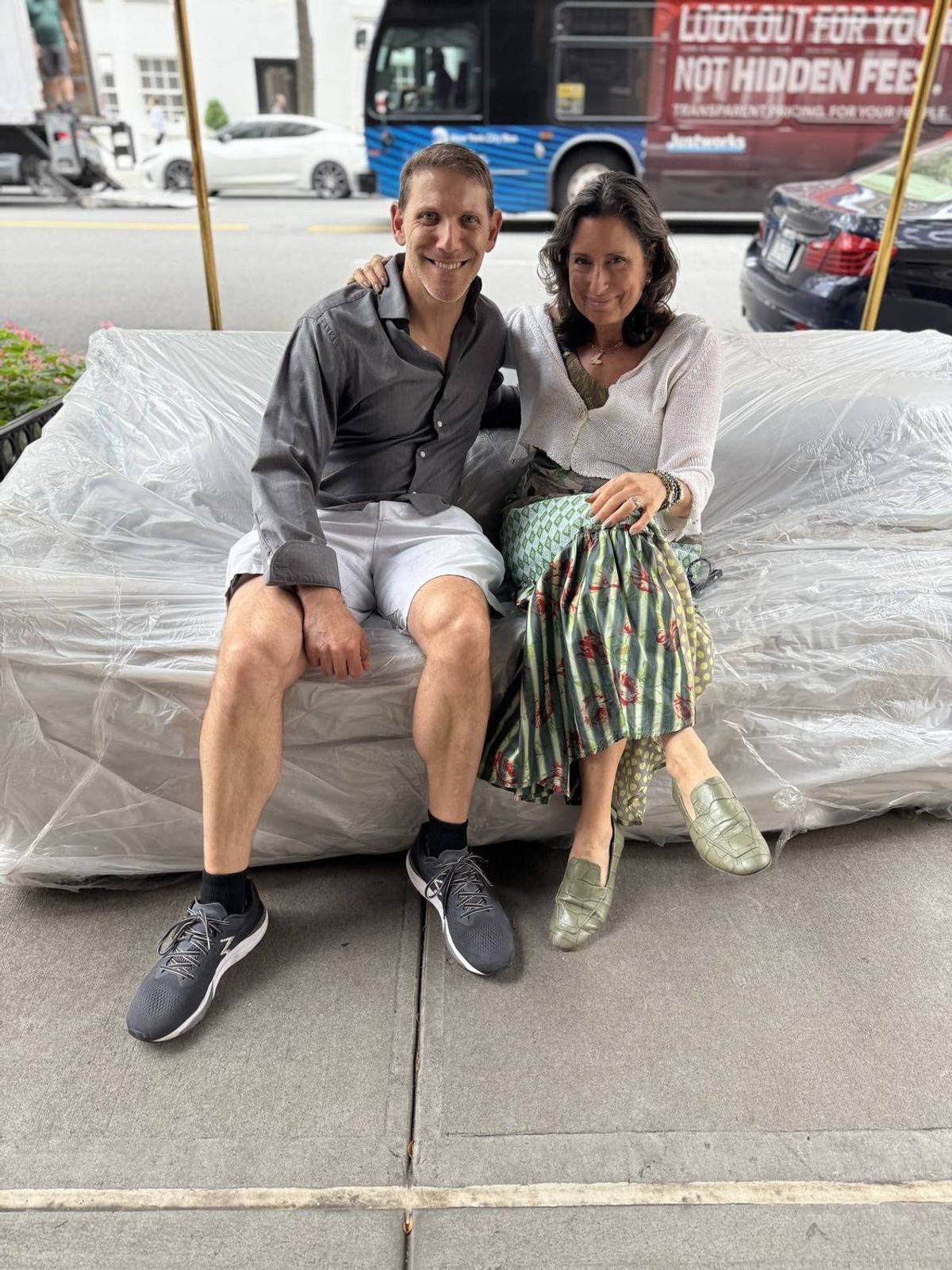

Jon Kortmansky’s wife Lori privately battled for years
Jon Kortmansky was away on business when his wife Lori discovered what would become their dream home. She was instantly smitten and in 2005 made the highest bid they could manage before he had even laid eyes on it.
“It was a one-bed apartment, but it had these dark wooden floors that were almost black and she just knew ‘this is it’,” Jon recalls of the apartment on the Upper East Side of New York. An interior designer by trade, Lori threw herself into transforming their home into something truly special, and a decade later the couple purchased the neighbouring apartment, knocked down the dividing wall and created their perfect home.
“Five months later, we moved into a three-bedroom, three-bath apartment with a 240 square foot balcony. It was just her. Even if she wasn’t there, you felt her all around,” says Jon, 57.
Together they built a remarkable life. Thanks to Jon’s career as a partner at a law firm, they were fortunate enough to travel extensively and during the winter months hit the slopes almost every weekend.
Amid their hectic lives, Lori, Jon’s college sweetheart, had kept a heartbreaking secret from everyone except him — she had been fighting brain cancer since her 20s.
“I met her when I was 18, a week after arriving at Indiana University. She walked by me with a friend, and I said, ‘Where are you going?’
“And she goes, ‘I’m going back’. And I said: ‘You don’t want to do that. You want to talk to me!’ And she did.” The pair were friends for two years before romance blossomed, and Jon fell head over heels. “She had this smile that would light up a room. She was always happy and always saw the good in people,” he says.
Two years after tying the knot at 25, Lori began suffering from head rushes, eye flutters and a metallic taste in her mouth. Within three weeks, she received a diagnosis of an aggressive malignant brain tumour the size of a plum.
Moments after her diagnosis in 1998, the couple were given just 20 minutes to decide whether to abandon their plans to start a family, ahead of an experimental bone marrow treatment that would leave her infertile.
“She started having MRIs every three months and she had probably 20 recurrences along the way, with three more brain surgeries and multiple rounds of radiation. But if you met her, you would not know there was anything wrong with her. She kept it from some friends and all her clients,” Jon says, still in awe of Lori’s remarkable strength.
Following her diagnosis, Lori established her own business, learned French and explored the world. Even as her eyesight worsened, she wandered through foreign cities without hesitation.
“She would ski in the trees and jump off rocks. She was just a ridiculously incredible person,” he says. When a stroke left her with a limp, a neighbour assumed it was a skiing injury and she let him believe it: “Her right side was paralysed, but two weeks later she was on the golf course. She skied after surgery had left her skull separated. She was just so determined to live and not let her illness hold her back. Lori had such a zest for life.”
Lori lived life to the fullest until the disease took hold. During Covid, Jon found himself working relentlessly from home while simultaneously caring for her. The financial burden of her care was enormous, and the emotional strain even greater.
In her final 18 months, Lori became entirely incapacitated, unable to swallow, speak, or even blink. The couple had made no modifications to their flat and there was no hospital bed in sight.
Jon tended to her round the clock, feeding her with a medicine dropper, bathing her, assisting her to the bathroom and constantly repositioning her to avoid choking. He sustained a broken rib, a slipped disc and a shoulder injury as a consequence.
“I had to be there constantly to move her quickly in case she vomited and drowned. I had an aide help occasionally, but ultimately I did it all myself,” he says.
Jon could not afford to stop working and he needed health insurance. A nurse cost $100 an hour, one experimental drug cost $25,000 per treatment and he estimates that Lori’s final year cost $500,000. So he juggled caring for her with his legal work.
“More than once I would hear a scream while I was on a conference call and come running. Or I would clean her up while on the phone. Looking back it was insanity, but at the time, it was just what I had to do,” he remembers.
Lori passed away in Jon’s arms on April 3, 2021, aged just 51. “I have no recollection of the immediate days following her death. I know my sister took me to her house and I am pretty sure she fed me, but I cannot tell you what I did, who I spoke with or even whether I slept,” he says.
His first vivid memory is of returning home several days later. Unable to fully step inside, he sat in the doorway and wept.
“The warmth and comfort I had felt for 15 years every time I walked through the door was gone. In its place was a cold, jarringly quiet place filled only with the memories of Lori’s last days.
“I am not sure how long I sat there, but I do recall at some point that a neighbour put their hand on my shoulder, asked if I needed anything and then quietly closed the door. It was then I realised, I no longer had a home,” he explains.
“Lori had become my entire life, so when she was gone, my life was gone. I still had friends and a job, but I had no focus. It was like I was floating around, watching the world and life happen, without participating in it. I didn’t feel like I was connected to life. It was like watching a movie.”
Following Lori’s passing, her presence remained everywhere throughout the flat: across 10,000 pages of writing, in notes scrawled on Post-its and napkins, in forgotten chocolates tucked into coat pockets and amongst countless keepsakes he couldn’t bring himself to discard.
He became obsessed with uncovering Lori’s hidden messages, pouring over her diaries and scouring every corner of their home. It made it impossible for him to move on or clear out her belongings.
“How can you chuck out a tea kettle if there is something hidden inside that you didn’t know about? Always hopeful that there would be something from Lori that would bring that connection, back, even if she wasn’t there.”
He even shut the bathroom door where he had looked after her, refusing to open it again for a whole year. Jon repeatedly found himself having to inform people of Lori’s death, many of whom hadn’t even been aware she was ill.
Before long, he began suffering from debilitating headaches that would leave him unable to do anything but sit and wait for the agony to subside.
He began to avoid returning home, spending weekends with friends, family, or staying in hotels. What had once been a warm, welcoming space, filled with the aroma of baking and open to friends, now felt cold and unbearable.
“I was paralysed because the apartment was the only safe place for me, but at the same time I had all these horrific memories. The last year-and-a-half of Lori’s life was one horror show after another,” says Jon.
Guidance from his sister Fara, who had also experienced bereavement at a young age, prompted him to move on and build a fresh life. He embarked on a search for a new home, viewing 70 apartments across the city before settling on his current place.
“As soon as I walked in, I felt the stress lift from my shoulders and I smiled. My broker Lydia told me it was the first time she’d seen me happy,” he says.
Following the move, his migraines subsided, he tucked Lori’s diaries safely away in a cabinet and now displays just a single photograph of her, determined to look ahead rather than dwell on his painful past.
“I am now doing really well. I am dating again and I have made a very conscious effort to separate from my prior life, I still have all my old friends, but I also made new friends.
“I have new travel that just belongs to me and have given myself permission to be happy. I am living my own life again, which I stopped doing for years after Lori died. And I know she would be pleased to see it.”
Source link