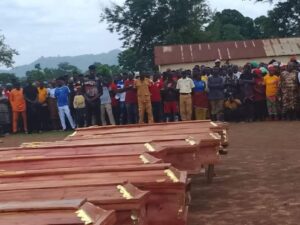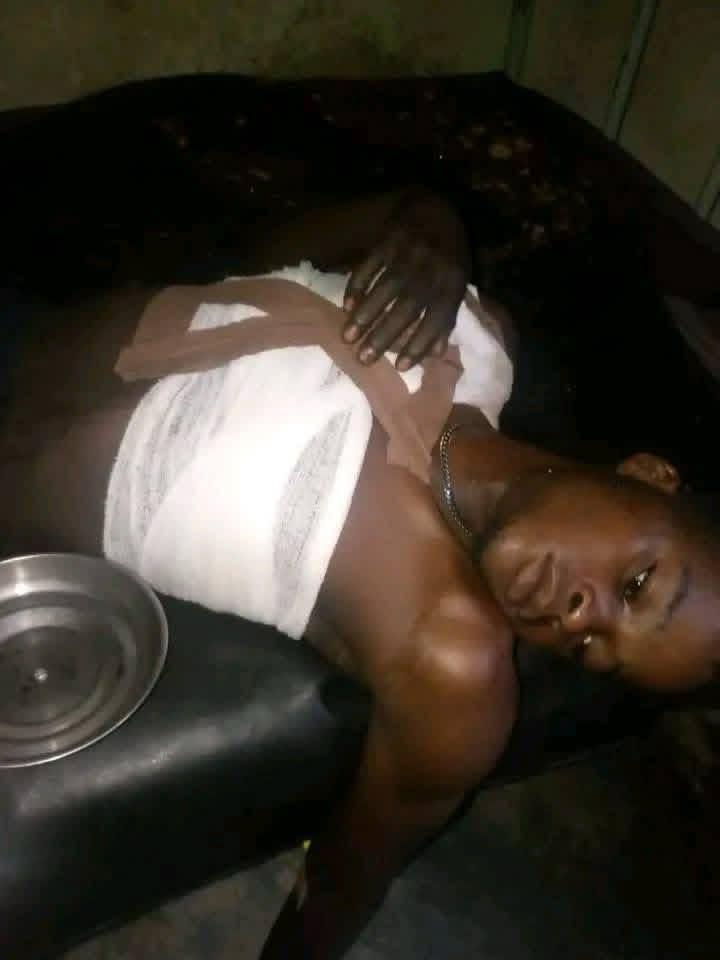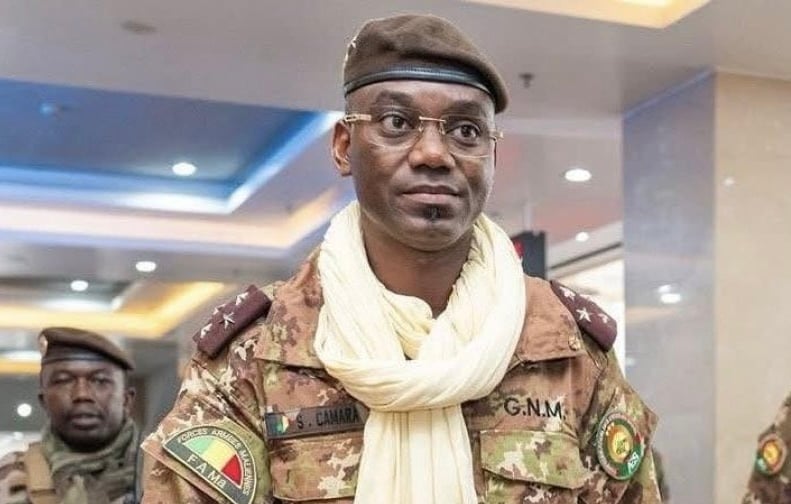
Mali has been plunged into fresh turmoil after its Defence Minister Sadio Camara was killed in an attack on his residence, as heavy fighting between the country’s army, jihadist groups, and separatist rebels continued to spread across multiple regions, including areas close to the capital, Bamako.
According to his family and an official source, Camara died alongside his second wife and two grandchildren when a car bomb struck his home in the junta-controlled stronghold of Kita, located outside Bamako. The incident marked one of the most serious direct blows to the country’s military leadership in recent years.
The attack formed part of a wider wave of coordinated assaults carried out on Saturday by Tuareg separatists under the Azawad Liberation Front coalition and jihadist fighters linked to the Group for the Support of Islam and Muslims, targeting several strategic locations across Mali.
Fighting continued into Sunday, with renewed clashes reported in multiple towns including Kita, Kidal, Gao, and surrounding areas, signalling that the security situation remained highly unstable despite government claims of control.
In a significant development, Tuareg rebels announced an agreement allowing Russian forces supporting the Malian army to withdraw from Kidal, a key northern city that has long been a focal point of conflict and political symbolism in the region.
A Tuareg representative said an arrangement had been reached for the Malian military and its Russian Africa Corps allies to exit their position in Camp 2, where they had reportedly been encircled since the previous day, adding that armed groups had since taken control of parts of the city’s streets.
Residents described visible movement of military convoys but said uncertainty remained over the full scope of the withdrawal, while confirming that fighters linked to armed movements were present in several areas of Kidal.
Kidal, a historic Tuareg stronghold, had only been retaken by Malian forces in late 2023 with support from Russian-backed Wagner fighters, ending more than a decade of rebel dominance before the latest escalation reversed the situation on the ground.
Rebel sources also claimed to have established positions in parts of the northern Gao region, although the full extent of territorial control remains unclear amid ongoing clashes and limited independent verification.
Security sources suggested that the coordinated attacks were not necessarily aimed at holding territory permanently, but rather at executing strategic strikes, with Kidal seen as a symbolic and politically significant target.
The Malian government reported that 16 civilians and soldiers were wounded in the violence and said material damage was limited, insisting that security forces had brought the situation under control in all affected areas.
Despite these assurances, residents in areas such as Senou near Bamako, where the international airport is located, described a tense atmosphere, with explosions and gunfire leaving communities shaken and fearful.
In Kati, another area affected by the unrest, residents reported relative calm after jihadist fighters withdrew, but said uncertainty and fear persisted following the intensity of the clashes.
The violence drew international concern, with the United Nations Secretary-General Antonio Guterres expressing alarm over the coordinated attacks across Mali and calling for stronger international cooperation to address rising violent extremism and humanitarian needs in the Sahel region.
The European Union also condemned the attacks, describing them as terrorist actions that further destabilise an already fragile security environment.
Russia’s Africa Corps, which now operates under the Russian defence ministry, has taken over roles previously held by the Wagner Group in supporting Mali’s military operations against insurgent groups.
The crisis unfolds against the backdrop of Mali’s broader political realignment, as the military-led government continues to distance itself from France and other Western partners while deepening security cooperation with Russia.
With Mali’s vast territory, valuable mineral resources, and long-running insurgency challenges, the latest escalation highlights the continuing volatility in the Sahel and the widening pressure on the country’s ruling junta as multi-front conflicts intensify.