Roses require one simple task in April to produce bigger, healthier blooms. Here’s how to get abundant flowering this summer
Roses form a substantial element of my garden, with five plants featuring various colours and types. Following my March pruning session, just one crucial job remained besides watering – applying fertiliser. While roses will bloom without feeding, achieving larger, superior flowers requires fertilisation.
Liam Beddall, gardening expert and senior rose consultant at David Austin Roses, told me that nourishing your roses will “encourage strong, healthy growth and abundant flowering”.
It’s a reasonably swift and straightforward task, yet it ranks among the most advantageous jobs for ensuring your roses reach their healthiest condition when summer comes.
Roses are demanding feeders, requiring substantial nutrients to develop strongly and yield plentiful blooms.
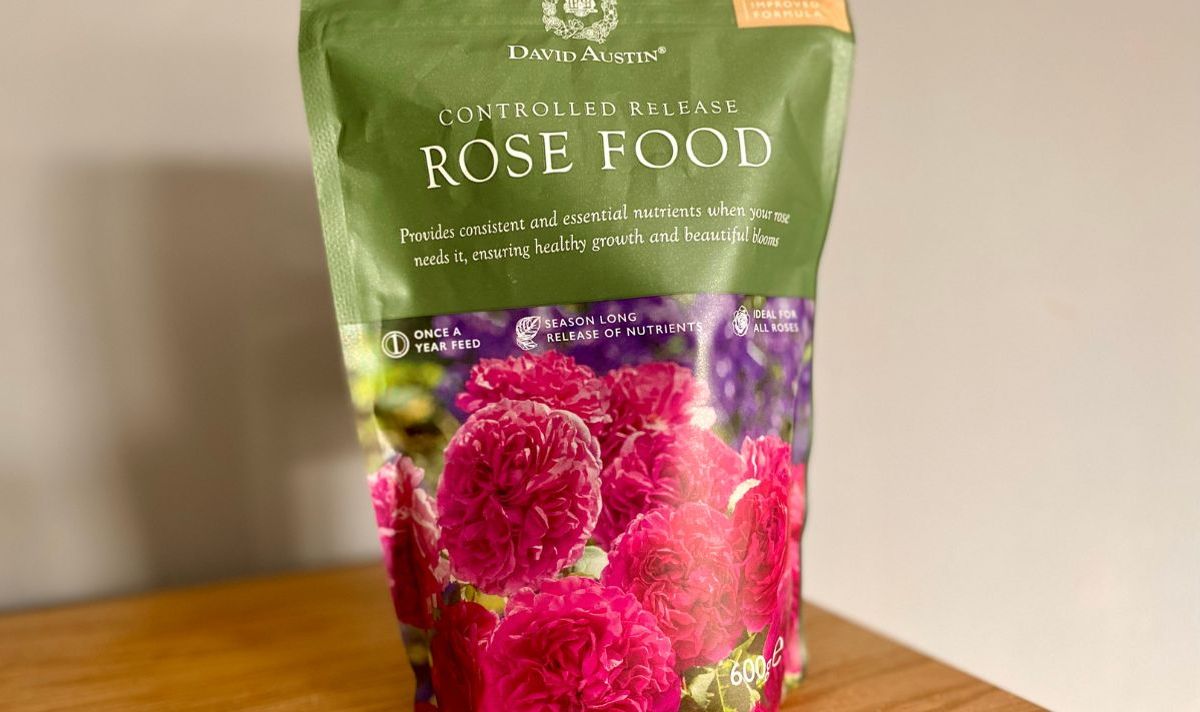
For feeding my roses, I use David Austin Controlled Release Rose Food. This fertiliser’s formulation means you need only feed your rose “once a year to encourage strong, healthy growth and abundant flowering”.
The rose feed delivers nutrients at the right time by monitoring soil temperature and moisture to determine your rose’s needs, ensuring nothing goes to waste.
Prior to spreading the fertiliser around my roses, I donned my gardening gloves and employed a hand fork to remove weeds, dead foliage and other debris from the base.
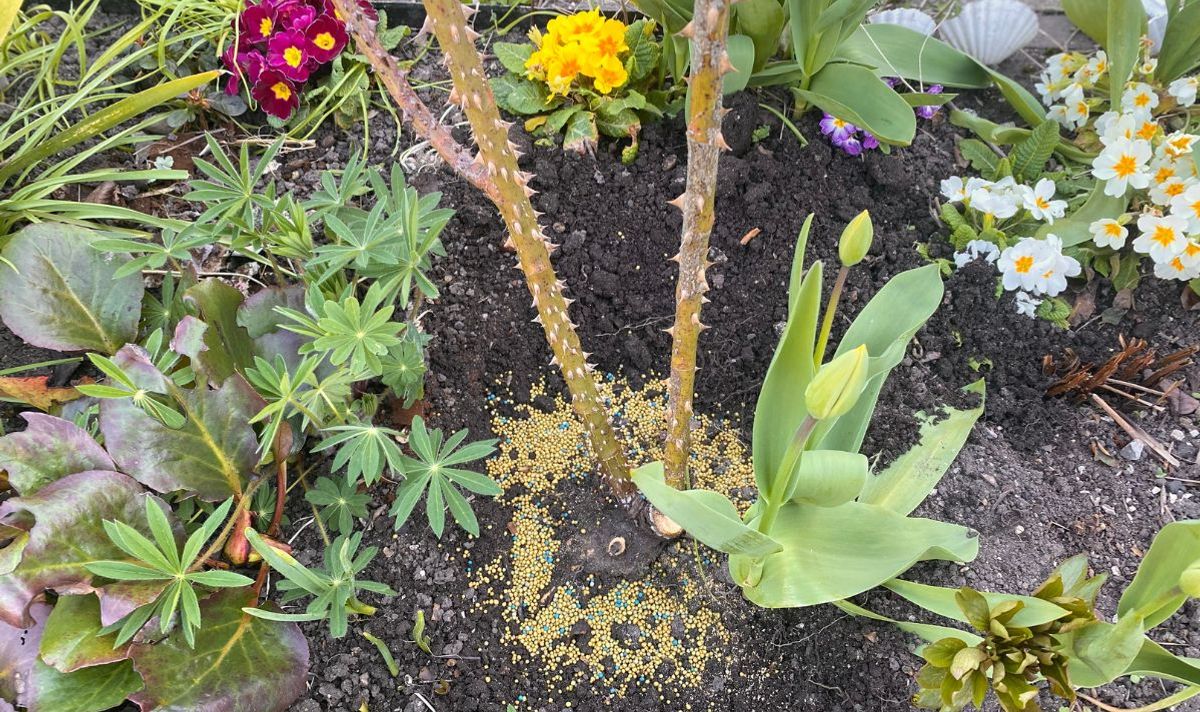
I then sprinkle roughly 30g of the rose feed around the base using the included measuring scoop. As this is a shrub rose, use 30g; for climbing or rambling varieties, use 60g.
Once the fertiliser has been applied, I next ensure the area receives a thorough mulch. Mulching means adding a protective layer around your roses’ base. I did this by using garden compost made up of all my kitchen scraps and garden waste.
The primary advantage of mulching here is that it helps roses retain moisture, suppresses weeds and provides essential nutrients to the flowers as they grow.
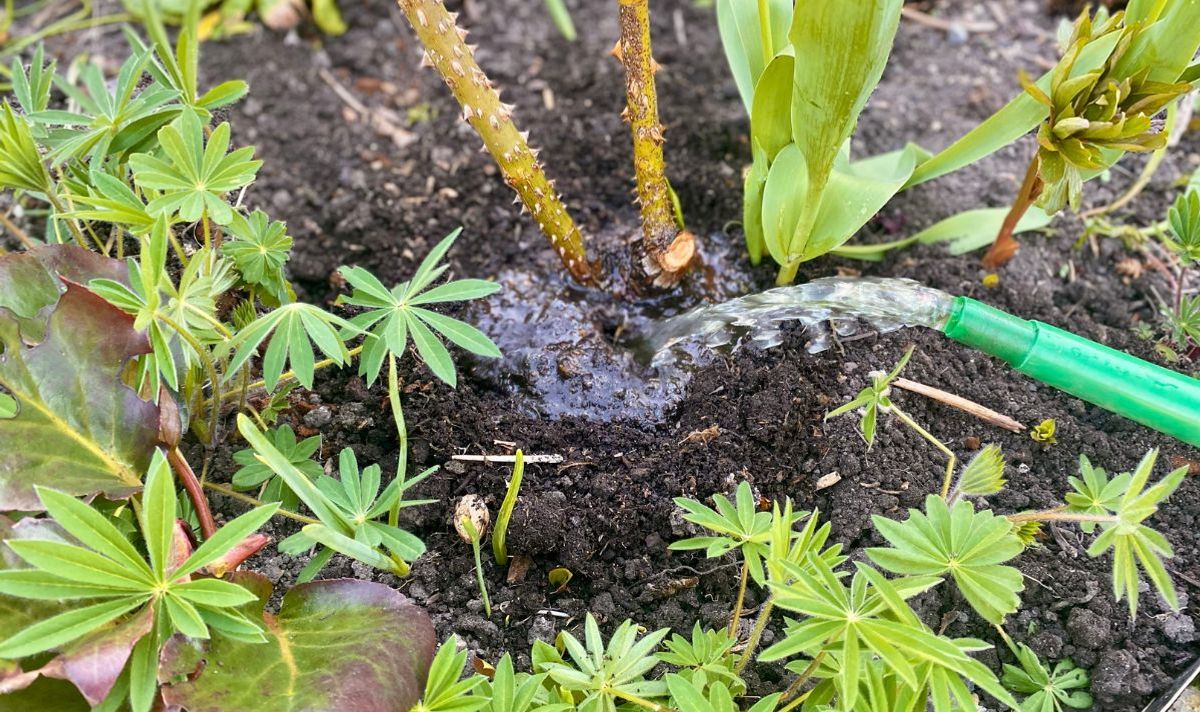
To finish this job, I ensure watering as close to the rose’s base as possible. Once the water started running away from the base, I briefly stopped to let it soak into the soil before continuing for a bit longer.
Source link